1. How Modern ATS Algorithms Evaluate Your Resume
Enterprise ATS engines have transitioned from rudimentary string-matching scripts to AI-powered natural language processing systems. When your document enters systems like Workday or Lever, it undergoes linear text extraction, tokenization, and semantic vector embedding.
Instead of counting how many times a word appears, modern screeners analyze contextual relationships between your past job responsibilities and the job posting's key requirements. You can test your profile instantly with our ATS Resume Checker to see your real-time match rating.
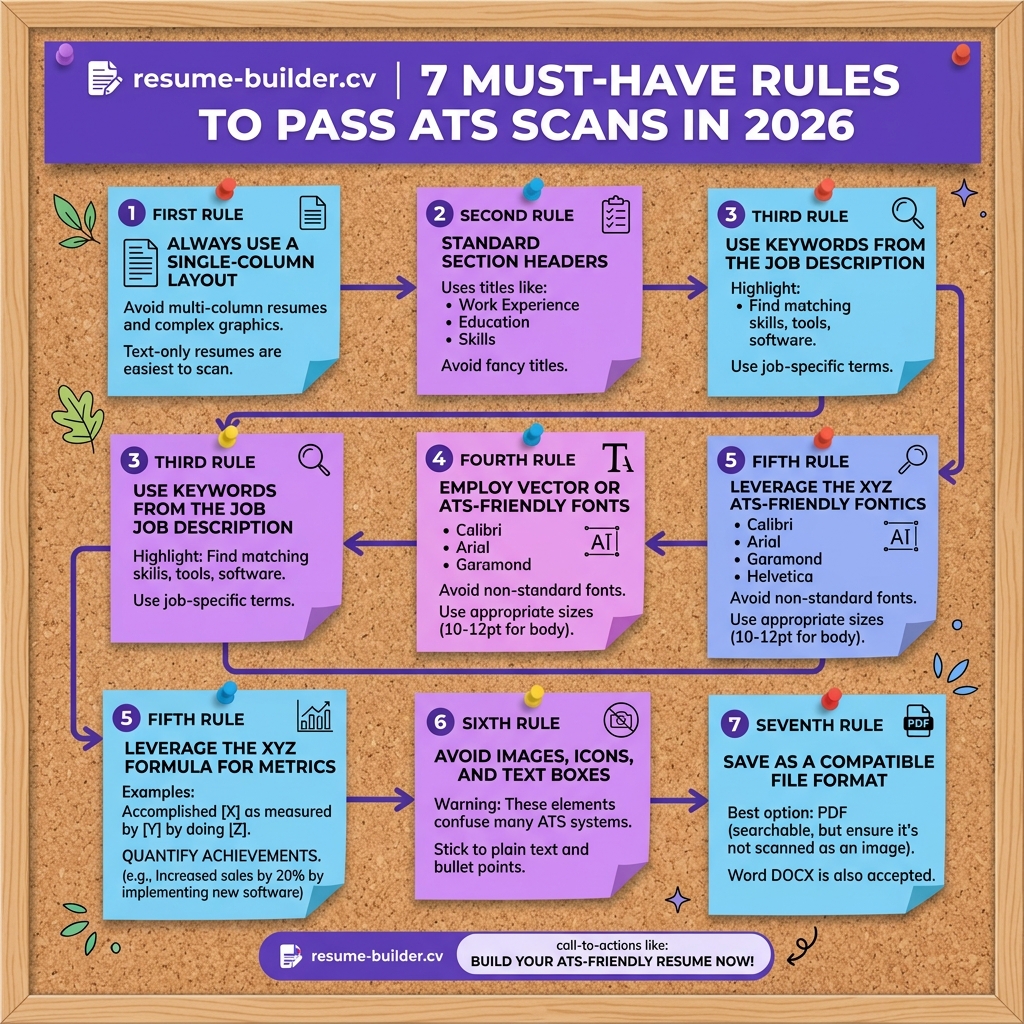
2. The 7 Must-Have Rules to Pass ATS Scans
- Standard Section Headings: Use standard titles like "Work Experience", "Education", and "Skills" instead of creative variants like "Places I've Been".
- Strict Single-Column Architecture: Multi-column sidebars cause left-to-right parser text merging, jumbling your bullet points.
- Contextual Keyword Placement: Embed key tools and methodologies inside bullet points rather than isolated keyword blocks.
- Quantifiable Metrics (Google XYZ Formula): Include numeric tokens (percentages, dollar amounts, time saved) to boost semantic similarity.
- Clean Vector Typography: Use standard fonts like Inter, Plus Jakarta Sans, or Arial; avoid custom embedded SVG icon fonts.
- Exact Acronym & Term Alignment: Include both written terms and common acronyms (e.g. "Search Engine Optimization (SEO)").
- Automated AI Resume Building: Leverage an AI Resume Generator to automatically match job posting parameters without manual guesswork.
3. Avoidable Formatting Traps That Freeze Parsers
Common aesthetic elements like skill progress bars, floating text boxes, and table borders are the number one cause of silent parser failure. Standard text extractors discard floating text boxes entirely, resulting in blank resumes inside recruiter portals.
4. Contextual Keyword Integration vs. Keyword Stuffing
Keyword stuffing—such as pasting invisible white text or listing 50 technologies in a footer grid—is flagged and penalized by modern LLM filters. To learn more about ethical optimization strategies, read our guide on How to Beat ATS algorithms.
5. Frequently Asked Questions
Common questions regarding ATS scanning criteria and optimization steps:
Frequently Asked Questions (AEO Direct Answers)
How can I test if my resume passes an ATS scan?
Use an automated ATS resume checker to upload your document alongside the target job description. The tool parses the text and calculates a semantic similarity score.
Should I submit a PDF or DOCX file to pass ATS?
Standard single-column PDFs created with clean vector typography are accepted by 99% of modern enterprise ATS platforms (Workday, Greenhouse, Lever). Avoid scanned image PDFs.
Does keyword density matter for ATS screening?
Yes, but context is critical. Modern LLM-based parsers penalize raw lists of keywords at the bottom of the page and reward keywords integrated naturally within role accomplishments.
Actionable Takeaways
- Stick strictly to single-column layouts to eliminate left-to-right parser text corruption.
- Use standard section headers like 'Work Experience' and 'Technical Skills'.
- Pair every keyword with a quantifiable metric using the XYZ accomplishment formula.
- Scan your document with a real-time ATS checker before submitting to any role.
Writing an article or blog post about career automation? Copy this clean HTML citation snippet to credit our research:
<a href="https://resume-builder.cv/blog/how-to-pass-ats-scan">How to Pass ATS Scan Guide (2026)</a>