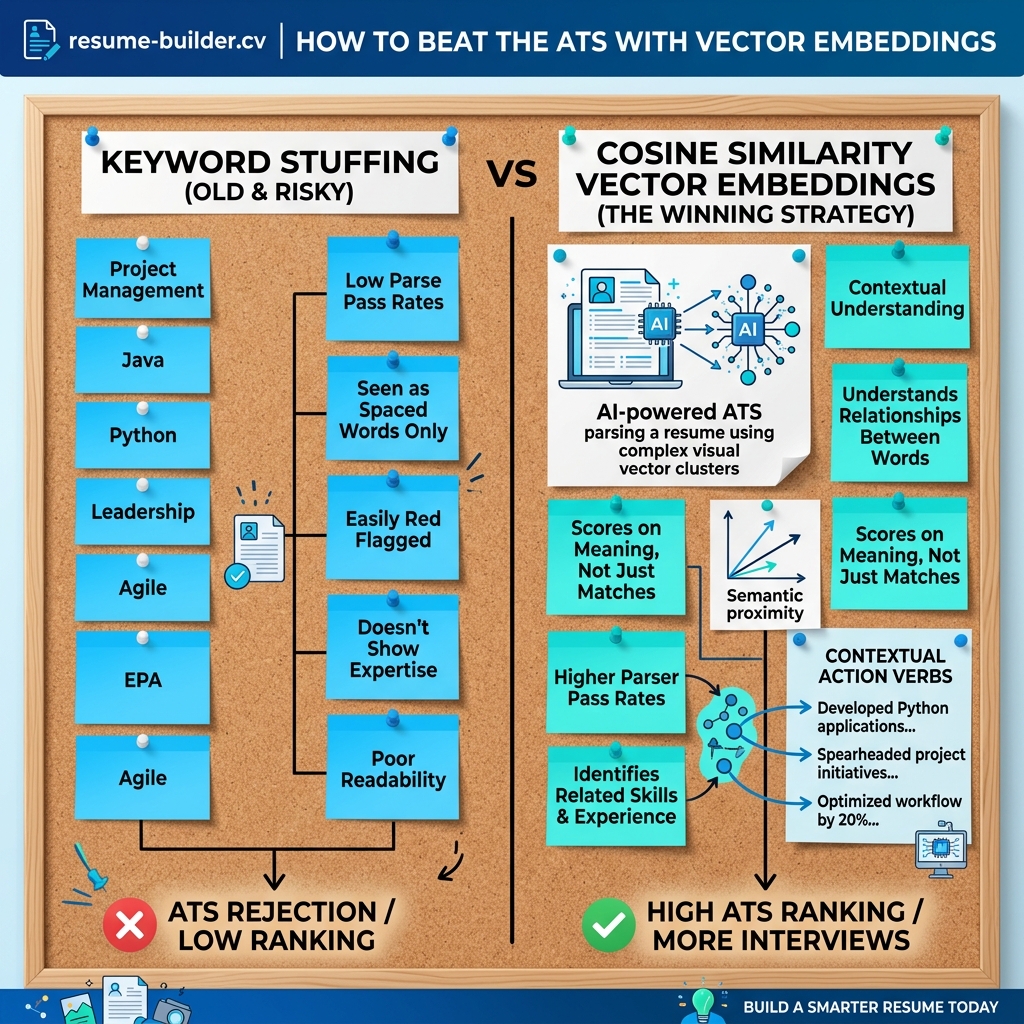
Traditional keyword stuffing is actively penalized by modern parsers. Instead, ATS software uses large language models (LLMs) to construct high-dimensional vector embeddings of your resume. The software compares these embeddings against the target job description to compute a semantic 'similarity score'.
To optimize for this, focus on creating high-fidelity descriptions of your accomplishments. Structure each bullet point under your past roles to start with a strong action verb, followed by a specific technical context, and conclude with a quantifiable business outcome.
Actionable Takeaways
- Leverage precise context-aware action verbs (e.g. 'Architected' instead of 'Worked on').
- Avoid multi-column tables, text boxes, and custom SVG icons which confuse basic parsing libraries.
- Incorporate key tools and methodologies organically rather than listing them in isolated keyword grids.
Cite or Share This Article
HTML BacklinkWriting an article or blog post about career automation? Copy this clean HTML citation snippet to credit our research:
<a href="https://resume-builder.cv/blog/how-to-beat-ats">How to Beat the ATS: AI-Powered Resume Strategies (2026)</a>